2 But
there were false prophets also among the people, even as there shall be
false teachers among you, who privily shall bring in damnable heresies,
even denying the Lord that bought them, and bring upon themselves swift
destruction.
2 And many shall follow their pernicious ways; by reason of whom the way of truth shall be evil spoken of. -2 Peter 2:1-2 King James Version (KJV)The Christian Church, which the Master Jesus established, entered into apostasy or a falling away from the truth as seen in the Roman Catholic Church.
Apocalypse Explained, by Emanuel Swedenborg, [1757-9], tr. by John Whitehead [1911], at sacred-texts.com
114
...[9] I will here also mention a great scandal heard from the pope called Benedict XIV. He
openly declared [in the spiritual world] that when he lived in the
world he believed that the Lord had no power, because He had transferred
it all to Peter, and after him to his successors; adding his belief
that their saints have more power than the Lord, because they hold it
from God the Father, while the Lord resigned it all and gave it to the
popes; yet that He is still to be worshiped, because otherwise the pope
is not worshiped with sanctity. But because this pope even after death
claimed the Divine for himself, after a few days he was cast into hell.

Pope Benedict XIV (31 March 1675 – 3 May 1758), was Pope from 17 August 1740 to his death in 1758
1029.
...the
church consisting of those who by means of the holy things of the
church strive to gain dominion over the whole world, and this by
dominion over the souls of men, claiming to themselves authority to save
whomsoever they will; and these finally seek dominion over heaven and
hell and make it their own. And to this end they draw and transfer to
themselves all the Lord's authority, as if it had been given them by
Him. The church consisting of such is very different in the beginning
from what it becomes in process of time. In the beginning they are as it
were in zeal for the Lord, for the Word, for love and faith, and
especially for the salvation of men. But in that zeal the fire of
domineering lies hidden; and in process of time as dominion increases
this breaks forth; and so far as it comes into act the holy things of
the church become the means, and dominion itself the end; and when
dominion becomes the end the holy things of the church are applied to
that end, and thus to themselves; and then they not only ascribe the
salvation of souls to their own authority, but they also appropriate to
themselves all the Lord's Divine power. And when they do this they
pervert every good and every truth of the church, and thus profane the
holy things of the church... [2]
That this is so has been shown me... In the spiritual world there were
those who strove to gain such dominion; and as they knew that the Lord
alone has all power, they put on a seeming zeal for Him and for heaven
and for the church, and they labored with all their might to worship the
Lord alone, and to observe in a holy way all things of the Word; and
they arranged to have sanctity and integrity prevail in all. But it was
granted to know that in such zeal an ardent desire of domineering over
all others lay hidden, believing that the things they arranged would be
acceptable to the Lord. For just as soon as they began to gain dominion,
their end was gradually disclosed, which was that they and not the Lord
should rule, and thus that the Lord should serve them and not they the
Lord; and they were indignant [feeling or showing anger or annoyance] if
they were not permitted, like gods, to dispose everything at their
will; and it was perceived also that they thought lightly of the Lord,
and even rejected Him if He did not grant them authority to do all
things as they pleased, and unless He assented to every decision of
theirs. It was also perceived that if they dared, they would, under some
pretext, transfer His Divine authority to themselves; but they were
afraid of being for this reason cast down into hell... The
conclusion to be drawn from this was that when dominion becomes the
end, and the holy things of the church become the means, the worship of
God is turned, under various pretexts, into the worship of men; so that
they themselves are actually gods, and the Lord is not actually God, but
is so called for the sake of form. [3] Now because dominion by means of
the holy things of the church over the souls of men, over heaven, and
over the Lord Himself, is inwardly profane, it follows that it is
infernal [or hellish] for the devils who are in hell desire nothing so
much as to have dominion over heaven, and over the Lord Himself; and
this they attempt to do under various pretexts, but as soon as they
attempt it they are swallowed up by hell. And since those who in the
world cast the Lord down from the seat of His kingdom and place
themselves upon it, are in heart like devils, it is evident that a
church made up of such must in process of time be devastated as to all
its good and all its truth; and this is its end. That such are devils is
evident from the same in the spiritual world. Those who have exercised
the Lord's Divine authority in the world talk about the Lord after death
in a most holy manner, and worship Him with all external devotion. But
when their interiors are looked into (for in the spiritual world these
can be uncovered and looked into) they are seen to be profane, because
they are godless and full of diabolical craft; and from this it becomes
clear that their holy externals had served them as means to an end,
which was dominion... [4]
...such... at this day is clearly evident from the fact that under the
pretext of the keys having been given to Peter, they have transferred to
themselves all the Divine authority of the Lord, that they have shut up
Divine truth from the people by taking away the Word, and that they
have ascribed to the decrees of the Pope a holiness equal and even
superior to the holiness of the Word; also that they teach little, if at
all, the fear and worship of God, but only a fear and worship of
themselves, and also a worship of the saints for the sake of themselves.
All this makes clear that... [the Roman Catholic Church] in its end is a
church empty and void of all the good of love to God, and of all the
good of love towards the neighbor, and consequently of all truth...
1032.
1032.
...[2] ...a
love of having dominion over all things of the world, and still
further, over all things of heaven and the church, and finally over the
Lord Himself, cannot do otherwise than wholly change Divine truths into
falsities and Divine goods into evils, thus the church into a religious
persuasion in which all its good and truth is adulterated and profaned.
For by that love a man wholly turns himself away from the Lord, and
turns only towards self; and thus he can no longer be led by the Lord,
but is led by what is his own; and to be led by what is his own is to be
led by hell. Man is either led from heaven or he is led from hell; he
cannot be led by both at the same time; and he is led from heaven when
he is led by the Lord, and from hell when he is led by self. For man was
so created as to be capable of being raised above what is his own and
of thinking in that elevated state. He is raised above what is his own
and thinks in that elevated state when he is raised up by the Lord; and
this is effected when he acknowledges the Lord and His Divine power over
heaven and earth; and by that confession and faith of the heart he has
conjunction with the Lord; and when conjunction is effected, the
interiors, which belong to his mind, that is, to his understanding and
will, are held by the Lord under his view. This is effected by an
elevation above what is his own; and when man thinks in that elevated
state he thinks truth from the Lord and does good from Him. [3] The
opposite comes to pass when a man strives to gain dominion over the
world, over heaven, and over the Lord; for he then immerses the
interiors of his mind which belong to his thought and will in what is
his own; and when a man is immersed in what is his own he thinks and
wills from hell; consequently he thinks and wills falsities and evils;
and for the reason that what is man's own is nothing but evil for it is
his inherited evil...
1033.
1033.
...That
the... [Roman Catholic Ministers] have subjected the truths of the Word
and the holy things of the church to their judgment, jurisdiction, and
dominion, can be seen from this, that they persuade the people that the
Word is understood by them alone and not by any who have not been
inaugurated into the ministry; and by this means they subject all things
of the Word and thus all things of the church to their dominion. [3]
Moreover, the Word is such in the sense of its letter that it may be
drawn aside to confirm any heresy whatever; for the sense of the letter
consists of appearances of truth, which hold enclosed in them the
genuine truths of heaven, which are called spiritual truths; and unless
these truths are revealed and laid bare, that is, unless they are taught
in the doctrines of the church, the appearances they present may be
drawn over and perverted to favor any falsity whatever, and even to
favor evil. For the genuine truths of the Word are like a man, and the
appearances of truth, of which the sense of the letter consists, are
like his garments, from which alone no judgment can be formed respecting
who the man is or what he is. If a man were judged from his garments
alone, a king might be called a servant, and a servant a king, and a
good man might be called an evil man, and an evil man a good man; and so
on. So those who arrogate [take or claim something] without
justification. to themselves dominion over all things of the church and
heaven can apply the sense in its letter a thousand ways to favor their
dominion. And this is an easy task, because all things of the church,
which are called holy, they place above the human understanding, and
when this is assented to and no genuine truth is taught, infernal
[hellish] falsities may be called truths, and devilish evils may be
called goods; and the simple may even be persuaded that the edicts of
the Pope are just as holy as the commandments of the Word, and even more
holy; and yet these are from heaven, while those edicts are for the
most part from hell. For every edict respecting government, faith, and
worship in the church, that has for an end dominion in the world,
however it may appear in the external form, and may sound as if from the
Word, is from hell; while every commandment from the Word, because it
has for its end the salvation of souls by the Lord, is from heaven...
1044.
1044.
...[The Roman Catholic Church's] appearance
in externals [is] to be in the cognitions of good and truth, and yet in
internals they are in the knowledge of evil and falsity... The...
[Roman Catholic Church] is such, namely, that they wish to appear to be
in sanctity, and thus in every good and truth and in the knowledges of
these, and to appear in consequence to be intelligent above all others
in the world, although in fact they are in no good or truth nor in any
knowledges of these, and thus not in any intelligence or wisdom in
spiritual things. That they are not in these, but are instead insane in
respect to them, is clearly seen in the spiritual world, where the
interiors of every man are laid bare and thus clearly appear. In the
case of the monks, and especially the Jesuits [members of a Roman
Catholic order of priests founded in 1534 to do missionary work,] who
from their cleverness were considered to be more intelligent than all
others in the world, their interiors were found to be so empty and void
that they did not know a single truth that leads to heaven... [2] They
appear in externals to be in goods, truths, knowledges, intelligence,
and wisdom, because they have made subject to their dominion all the
holy things of the Word, of the church, and of worship, and therefore
from dominion they speak with the common people, persuading them that
they hold the mysteries of heaven, and that their Pope utters his edicts
from inspiration, like that of the prophets and apostles; and this they
can declare in a haughty manner, because they speak from the authority
of dominion over souls, and over heaven and hell; and from a persuasion
of their holiness it can be accepted by the common people with no
repugnance of heart, since the common people are kept for this very
purpose in dense thick darkness respecting spiritual things. And in that
thick darkness they inspire spurious [not being what it purports to be;
false or fake] goods and foolish truths, which they call Divine and
heavenly; and in such thick darkness in which the common people are
kept, they are even able to inspire devilish and infernal [hellish]
evils and falsities, and to induce a faith in them as if they were
celestial and spiritual goods and truths; for thus and not otherwise can
they be adored as deities, and subject countries and possessions to
their command and disposal. Such are the things that lie hidden inwardly
in them...
1050.
1050.
...That
the... [Roman Catholic Church does] violence to the truths of the Word
that teach about the Lord can be clearly seen from this, that they have
transferred the Lord's Divine authority to the Pope as His vicar, and
worship and adoration along with it; also with this end in view they
have separated the Lord's Divine from His Human, that they might say
that they have not assumed His Divine but His Human authority; not being
willing to know that the Divine authority consists chiefly in the power
to save the human race; although... [they] appropriate even this power
to themselves...
...The
Word which in the beginning was received in the church and read,
...afterwards was taken away from the people and not read (n. 1054); ...it
is acknowledged as Divine and yet is rejected (n. 1055); ...those of
that religion who reject the Word (n. 1056); "whose names have not been
written in the book of life from the foundation of the world," signifies
that there are those who do not acknowledge the Lord's Divine authority
over heaven and earth, but regard it as transferred to a certain vicar,
and from him to his vicars (n. 1057)...
1054.
...the Word in the beginning was received in the church and read, and afterwards was taken away from the people and not read... In the beginning they acknowledged it as Divine, taught from it, and read it before the people; but... afterwards, as they extended their dominion over the church and over heaven, while they acknowledged it to be Divine they no longer taught from it as before. For they interdicted [or in other words the Roman Catholic Church banned] the people from reading it, and instead of doctrine from it they put forth their doctrine from the Papal throne as Divine, they instituted Divine worship in masses not understood by the common people, and they preached the adoration of the Pope and of dead men whom they call saints, instead of the Lord whom they previously adored... All this makes clear that... [the Roman Catholic Church] in the beginning was a church that worshiped the Lord, and preached the Divine truth from the Word, but afterwards, while it retained an adoration of the Lord it was an external, that is, a formal adoration, and the internal which is the essential adoration they transferred to the Pope as the Lord's vicar, and consequently to the ministering body as vicars under him; this may be seen above (n. 1029)...
1057.
1054.
...the Word in the beginning was received in the church and read, and afterwards was taken away from the people and not read... In the beginning they acknowledged it as Divine, taught from it, and read it before the people; but... afterwards, as they extended their dominion over the church and over heaven, while they acknowledged it to be Divine they no longer taught from it as before. For they interdicted [or in other words the Roman Catholic Church banned] the people from reading it, and instead of doctrine from it they put forth their doctrine from the Papal throne as Divine, they instituted Divine worship in masses not understood by the common people, and they preached the adoration of the Pope and of dead men whom they call saints, instead of the Lord whom they previously adored... All this makes clear that... [the Roman Catholic Church] in the beginning was a church that worshiped the Lord, and preached the Divine truth from the Word, but afterwards, while it retained an adoration of the Lord it was an external, that is, a formal adoration, and the internal which is the essential adoration they transferred to the Pope as the Lord's vicar, and consequently to the ministering body as vicars under him; this may be seen above (n. 1029)...
1057.
...there
are those who do not acknowledge the Divine authority of the Lord over
heaven and earth, but regard it as transferred to a certain vicar, and
from him to his vicars... (.Continuation respecting the Second Kind of
Profanation) [6]
Profaners [not initiated into the inner mysteries] of this kind are
stupid and foolish in spiritual things, but are crafty and keen in
worldly things, because they make one with the devils in hell... In a
word, the love of having dominion by means of the holy things of the
church corresponds to filth, and its delight to a stench indescribable
by words, and at which angels shudder. Such is the exhalation from their
hells when they are opened...
...(Continuation
respecting the Third Kind of Profanation) [2] Those who are in
this kind of profanation, which is hypocritical, differ in this respect,
that there are those who have less ability and those who have more
ability to conceal the interiors of their mind, that they may not be
disclosed, and to shape the exteriors, which pertain to the face and
mouth, into an expression of sanctity. When such after death become
spirits they appear encompassed with a cloud, in the midst of which is
something black, like an Egyptian mummy. But as they are raised up as it
were into the light of heaven, that bright cloud changes to a
diabolical duskiness, not from any shining through it, but from a
breathing through it, and the consequent darkening. In hell, therefore,
these are black devils. The differences in this kind of profanation are
known from the blackness, as being more or less foul and horrid.
...those
who are in worship according to that religious persuasion and are not
in dominion. When such live according to the statutes of the Pope, and
acknowledge him to be the Lord's vicar, and observe the holy things of
worship as they have been instituted, they are not dissimilar to upright
pagans, who know not otherwise than that they are truths, goods and
holy things which their ministers and monks teach; and this the more
because they do not read the Word, some because it has been taken away
from them, and some because under persuasion they depend upon the mouth
of their monks, and believe that these alone and no others understand
the Word. [2] But those of their people who look to the Lord, and to the
Pope only as to the head of the church, and who are in some affection
for truth, are indeed in... [the Roman Catholic Church,] but are not of
it; for after death these can be drawn away from the vanities of that
religious persuasion and from idolatries, and can be led to worship and
adore the Lord; and they also receive truths from the Lord through the
Word or through those who teach it. For this reason, after the Last
Judgment many societies, which are so many churches, were instituted
from these by the Lord (of which in what follows). In regard to "the
seven mountains" upon which the woman was seen to sit, it is believed
that they are the seven mountains of Rome, where the Papal throne is.
But admitting that Rome is meant, still "the seven mountains" signify
the goods of the Word adulterated and profaned; for the Word is
spiritual in every part, and this is the spiritual of it. That "the
seven mountains" signify the goods of the Word adulterated and profaned
is evident also from what immediately follows, where it is said that
"the seven heads of the beast" mean also "seven kings;" and "seven
kings" signify in the spiritual sense the truths of the Word falsified
and profaned...
...(Continuation
respecting the Fourth Kind of Profanation) [3] In this kind of
profanation [not initiated into the inner mysteries] are those
especially who read the Word and know about the Lord; because from the
Lord through the Word are all things holy that can be profaned... Those
who belong to this kind of profanation appear after death at first with a
face of human color, around which float many wandering stars; and those
of them that had been leaders sometimes appear shining about the mouth.
But as they are brought into the light of heaven, the stars and the
shining of the mouth vanish, and the color of the face is changed to
black, and likewise their garments. But the blackness of these profaners
draws something from blue, as the blackness... draws something from
red, for the reason that the latter profane the goods of the Word and of
the church, while the others profane the truths of the Word and of the
church. For red derives from the sun its signification of good, while
blue derives from the sky its signification of truth.
...(Continuation
respecting the Fifth Kind of Profanation) [3] This kind is not
like the others that have been treated of, for it consists in jesting
from the Word and about the Word. For those who make jokes from the Word
do not regard it as holy, and those who joke about it hold it in no
esteem. And yet the Word is the very Divine truth of the Lord with men,
and the Lord is present in the Word, and heaven also; for every
particular of the Word communicates with heaven, and through heaven with
the Lord; therefore to jest from the Word and about the Word is to
bespatter [soil] the holy things of heaven with the dust of the earth.

King Albert II of Belgium kneels before the Pope in 2009
...[2]
In respect to the matter itself, namely, that they [the Roman Catholic
Ministers] have transferred the Lord's authority over heaven and earth,
thus over men to save them, to their head and from him to the others who
are under him, this is well known; and it is evident from this that
with all the heart and mind they aspire to be gods over the earth,
consequently to be adored with Divine worship. That their head is adored
as a god in place of the Lord is evident from their venerating him upon
the knees, from the holy kissing of his shoes, also of his footsteps.
This veneration or rather adoration follows from this, that he is able
to open heaven by the keys of Peter, and thus to give heaven to
whomsoever he pleases; also by the same means to close heaven, thus to
cast into hell whomsoever he pleases... For they know that he who
possesses the souls of men and also their wealth, possesses men as God
does, and can transfer to himself a kind of Divine worship. From this it
is clear that those who belong to the... [the Roman Catholic Church] of
the present day, [1757-9] aspire with the whole heart and mind to be
gods, and to be adored with Divine worship. But although they aspire to
this they deny that they have transferred anything Divine to
themselves...
1066.
...The Lord's authority over heaven and earth, which they have transferred to themselves, is said not to be Divine, and yet it is Divine... [2] In respect to the thing itself it is well known that they claim that the authority over heaven, and over the souls of men to save them, is not Divine, since it was the authority of the Lord's Human transferred to Him from God the Father, and from the Lord to Peter. But this is said from a fear that the common people may withdraw from them. Nevertheless, that authority is Divine... Man is not saved in a single moment, since he is reformed and regenerated by the Lord by successive steps... That man is thus reformed and regenerated by the Lord they do not know, because they do not wish to know it; consequently they persuade themselves that salvation is instantaneous, and is simply an admission into heaven, which is a huge falsity...
1067.
...It [the Word] has been received and acknowledged as Divine chiefly because their religion is founded on the keys given to Peter, as described in the Word. Nevertheless, that it has been rejected is well known, for it is taken away from the common people [Swedenborg wrote this in 1757-9,] it is not read in the temples, and the same holiness and inspiration are attributed to the decrees of the Pope as to the Word; but as these are not in harmony with the Word, the Word in general is invalidated, and even blasphemed, by the claim that it is allowable to change it according to the state of the church. From this it is clear that the truth that the Word is Divine has been profaned [not initiated into the inner mysteries] by them...
1069.
...those Divine truths that the... [Roman Catholic Church] has profaned, ...are especially, that the Lord has authority over heaven and earth, and that the Word alone is holy and Divine; for these two truths make the church itself of the Lord on earth, for the church is a church from this that the Lord is adored and that the Word is read. For the Lord reforms man, and the Word teaches how man must live that he may be reformed by the Lord; therefore if these two truths are not acknowledged and received the church itself perishes, for upon these two truths the church is founded. It was for this reason that it came to pass through the Divine Providence of the Lord that certain churches separated themselves from the... [Roman Catholic Church,] and these acknowledge the Lord's Divine power over heaven and earth to be equal to the power of God the Father, and also attribute Divine holiness to the Word alone. This was provided by the Lord in order that the Christian Church in the European world might not be utterly overthrown...
1070.
...those who have not thus acknowledged that the Lord's authority over heaven and earth has been transferred to man, but have ascribed Divine holiness to the Word and not to the decrees of the Pope... have not... profaned... Divine holiness must be attributed to the Word; also that... they will acknowledge that the Lord has power to save, thus that He, and not the Pope, has dominion over heaven, the church, and the souls of men. [2] It has been said above that there are two things that constitute the church, namely, the acknowledgment and belief that the Lord has the power to save, and that the Word is Divine... But that the church in the European world might not wholly perish, it has been provided by the Lord that not only within the... [Roman Catholic Church,] but also outside of it, there should be societies that should not make one with the... [Roman Catholic Church,] in these two primary truths, which are the pillars and the foundations of the church itself. Within... [the Roman Catholic Church] there are those in the kingdom of France, and many in Holland, England, Scotland, and Ireland, who have not taken away from the Lord the power to save men, nor from the Word Divine holiness, and ascribed these to some vicar; as may appear from the contest between the Gallican Church [the Catholic Church in France] and the Roman [Catholic Church,] which has so long continued and still continues... Outside of the... [Roman Catholic Churches] there are churches that ascribe all power to save to the Lord, and none to the Pope, and acknowledge the Word alone to be Divine, and have wholly withdrawn from the papal dominion, and are consequently called Protestants and Reformed [Churches.]...
1071.
...It has been said above that the Gallican Church [the Catholic Church in France] acknowledges the Word to be the Divine truth, and ascribes a Divine inspiration to all the particulars of the Word, and not an equal Divine inspiration to the decrees of the Pope as to those things which are means of salvation; and the same is true of others in the European world; and this has come to pass from the Divine Providence of the Lord, that the Christian Church might not be wholly destroyed, because by means of the Word man has communication and conjunction with heaven, and through heaven with the Lord; and communication and conjunction with heaven and with the Lord cannot possibly be given through the declarations and decrees of the Pope, since these have not for their end the salvation of souls, but dominion; and all edicts and statutes that have dominion as their end, especially over the things of heaven and the church, have communication with hell, and effect conjunction with hell...
1074.
...those that are in love to the Lord, in love towards the neighbor, and in the faith of charity, have the truth respecting the Lord's Divine authority and the Divine holiness of the Word... The angels of the third heaven, who are in love to the Lord, are called the "called," the angels of the second heaven, who are in love towards the neighbor, are called the "chosen," and the angels of the first heaven, who are in the faith of charity, are called the "faithful." And since in the Lord's church on earth there are those who belong to the third, the second, and the first heaven, and who therefore become after death angels of those heavens, so "the called, the chosen, and the faithful," mean all those in the kingdoms under the dominion of the Pope who ascribe to the Lord the power of saving men, and ascribe to the Word alone Divine holiness and inspiration, and in these two doctrines recede from the vicarship of the Pope...
1079.
...the Reformed [Christian Churches,]... have altogether rejected all the statutes and decrees of the Pope, thus his falsifications and profanations, especially the two treated of above, namely, respecting his authority over the holy things of the church and over the souls of men to save them, which is called the authority to open and shut heaven, also respecting the authority to interpret the Word, and to change things in it to favor his own dominion; these being the two [doctrinal] heads of their religion which the Reformed have wholly rejected...
...The Lord's authority over heaven and earth, which they have transferred to themselves, is said not to be Divine, and yet it is Divine... [2] In respect to the thing itself it is well known that they claim that the authority over heaven, and over the souls of men to save them, is not Divine, since it was the authority of the Lord's Human transferred to Him from God the Father, and from the Lord to Peter. But this is said from a fear that the common people may withdraw from them. Nevertheless, that authority is Divine... Man is not saved in a single moment, since he is reformed and regenerated by the Lord by successive steps... That man is thus reformed and regenerated by the Lord they do not know, because they do not wish to know it; consequently they persuade themselves that salvation is instantaneous, and is simply an admission into heaven, which is a huge falsity...
1067.
...It [the Word] has been received and acknowledged as Divine chiefly because their religion is founded on the keys given to Peter, as described in the Word. Nevertheless, that it has been rejected is well known, for it is taken away from the common people [Swedenborg wrote this in 1757-9,] it is not read in the temples, and the same holiness and inspiration are attributed to the decrees of the Pope as to the Word; but as these are not in harmony with the Word, the Word in general is invalidated, and even blasphemed, by the claim that it is allowable to change it according to the state of the church. From this it is clear that the truth that the Word is Divine has been profaned [not initiated into the inner mysteries] by them...
1069.
...those Divine truths that the... [Roman Catholic Church] has profaned, ...are especially, that the Lord has authority over heaven and earth, and that the Word alone is holy and Divine; for these two truths make the church itself of the Lord on earth, for the church is a church from this that the Lord is adored and that the Word is read. For the Lord reforms man, and the Word teaches how man must live that he may be reformed by the Lord; therefore if these two truths are not acknowledged and received the church itself perishes, for upon these two truths the church is founded. It was for this reason that it came to pass through the Divine Providence of the Lord that certain churches separated themselves from the... [Roman Catholic Church,] and these acknowledge the Lord's Divine power over heaven and earth to be equal to the power of God the Father, and also attribute Divine holiness to the Word alone. This was provided by the Lord in order that the Christian Church in the European world might not be utterly overthrown...
1070.
...those who have not thus acknowledged that the Lord's authority over heaven and earth has been transferred to man, but have ascribed Divine holiness to the Word and not to the decrees of the Pope... have not... profaned... Divine holiness must be attributed to the Word; also that... they will acknowledge that the Lord has power to save, thus that He, and not the Pope, has dominion over heaven, the church, and the souls of men. [2] It has been said above that there are two things that constitute the church, namely, the acknowledgment and belief that the Lord has the power to save, and that the Word is Divine... But that the church in the European world might not wholly perish, it has been provided by the Lord that not only within the... [Roman Catholic Church,] but also outside of it, there should be societies that should not make one with the... [Roman Catholic Church,] in these two primary truths, which are the pillars and the foundations of the church itself. Within... [the Roman Catholic Church] there are those in the kingdom of France, and many in Holland, England, Scotland, and Ireland, who have not taken away from the Lord the power to save men, nor from the Word Divine holiness, and ascribed these to some vicar; as may appear from the contest between the Gallican Church [the Catholic Church in France] and the Roman [Catholic Church,] which has so long continued and still continues... Outside of the... [Roman Catholic Churches] there are churches that ascribe all power to save to the Lord, and none to the Pope, and acknowledge the Word alone to be Divine, and have wholly withdrawn from the papal dominion, and are consequently called Protestants and Reformed [Churches.]...
1071.
...It has been said above that the Gallican Church [the Catholic Church in France] acknowledges the Word to be the Divine truth, and ascribes a Divine inspiration to all the particulars of the Word, and not an equal Divine inspiration to the decrees of the Pope as to those things which are means of salvation; and the same is true of others in the European world; and this has come to pass from the Divine Providence of the Lord, that the Christian Church might not be wholly destroyed, because by means of the Word man has communication and conjunction with heaven, and through heaven with the Lord; and communication and conjunction with heaven and with the Lord cannot possibly be given through the declarations and decrees of the Pope, since these have not for their end the salvation of souls, but dominion; and all edicts and statutes that have dominion as their end, especially over the things of heaven and the church, have communication with hell, and effect conjunction with hell...
1074.
...those that are in love to the Lord, in love towards the neighbor, and in the faith of charity, have the truth respecting the Lord's Divine authority and the Divine holiness of the Word... The angels of the third heaven, who are in love to the Lord, are called the "called," the angels of the second heaven, who are in love towards the neighbor, are called the "chosen," and the angels of the first heaven, who are in the faith of charity, are called the "faithful." And since in the Lord's church on earth there are those who belong to the third, the second, and the first heaven, and who therefore become after death angels of those heavens, so "the called, the chosen, and the faithful," mean all those in the kingdoms under the dominion of the Pope who ascribe to the Lord the power of saving men, and ascribe to the Word alone Divine holiness and inspiration, and in these two doctrines recede from the vicarship of the Pope...
1079.
...the Reformed [Christian Churches,]... have altogether rejected all the statutes and decrees of the Pope, thus his falsifications and profanations, especially the two treated of above, namely, respecting his authority over the holy things of the church and over the souls of men to save them, which is called the authority to open and shut heaven, also respecting the authority to interpret the Word, and to change things in it to favor his own dominion; these being the two [doctrinal] heads of their religion which the Reformed have wholly rejected...
...the
Reformed [Christian Churches,] who have rejected the works... [of the
Roman Catholic Church,] which consist especially in gifts to the idols
of their saints, to their sepulchres [a small room or monument, cut in
rock or built of stone, in which a dead person is laid or buried,] also
to monasteries, and to the monks themselves, given as offerings for
various expiations [the act of making amends or reparation for guilt or
wrongdoing; atonement.]...
...the
Reformed, who are divided into three churches, one of which has
embraced the doctrine of Luther, another that of Calvin, and the third
that of Melancthon; nevertheless all three have wholly withdrawn from
the profane things of... [the Roman Catholic Church.]...
...There is domination over the truths of the church because their chief, who is called Pope and Pontiff [who was,
in Roman antiquity, a member of the most illustrious of the colleges of
priests of the Roman religion, the College of Pontiffs,]
ascribes to his own decrees an equal holiness and a like inspiration
with the truths of the Word. It is also a part of this doctrine that it
is lawful for him to change the truths of the Word according to the
changes of the state of the church, and thus to turn them into such
things as may be means of domination, and these are falsities; for all
things that have regard to domination are falsities, or truths
falsified, since the end chooses the means and applies them to itself;
and means that are applied to an end which is domination over the souls
of men, over all things of the church and over heaven, cannot be truths,
and if they are truths the end falsifies them, but with those only who
are in dominion...
...after the Last Judgment [which took place in the spiritual world in the year 1757] upon these... [of the Roman Catholic Church] their
religious persuasion would be wholly condemned, nor would it ever rise
again to eternity. But this must be thus understood, that this religious
persuasion will continue in the world, because the love of ruling is so
implanted in everyone that it cannot be rooted out, and so long as that
love is present it is impossible for that religious persuasion to come
to an end in the world; and yet in the spiritual world, into which
everyone comes after death, it will come to an end, for then all who are
of that religion and have exercised dominion from the delight of the
love of ruling, do not as they previously did, make for themselves
seeming heavens in the world of spirits, which is in the midst between
heaven and hell, and dwell there for a time, but as soon as they arrive
there they are sent away and cast into their hells. This is what is
meant by the destruction of Babylon, as predicted both... in Revelation,
and in many passages in the prophets. Since the... [Roman Catholic Church have
transferred the Lord's authority over heaven and the church to their
chief pontiff [or Pope,] whom they call the successor of Peter, and thus
the vicar of the Lord, declaring that the authority over heaven and
hell was transferred by the Lord to Peter, and that it was not the
Lord's Divine authority but His human authority given Him from God the
Father, I will show at the end of the articles of this chapter that the
Lord even as to His Human was God, that is, that His Human was Divine;
and from this it follows that the... [Roman Catholic Church] did
transfer His Divine authority to him whom they call the Lord's vicar
[or the Pope,] and thus they have made him God upon earth, and that he
has made his ministers deities, which can be nothing else than
horrible...
...[2] ...it shall now be told whence it is that the Babylonish nation [or the Roman Catholic Church]has
falsified the Word [or Bible] and weakened its Divine holiness. It has
been known in the whole Christian world that the Word is Divine, and
consequently that all things contained in the Word are Divine truths.
Now as the Babylonians have claimed for themselves and have actually
assumed dominion over all things of the church and also over heaven, and
as they thus let themselves into all evils that spring up from the love
of self, it was necessary for them to confirm those evils by means of
the Word, and this could be done only by falsifying it, for the Word can
in no wise confirm evil; consequently when a man confirms evil by means
of the Word he falsifies its truths. This was done by the Babylonians;
but as they still saw truths in the Word that they could not falsify, as
for instance, all that is said in it about Babylon [or the Roman Catholic Church,] so
by their craft they weakened the Divine holiness of the Word, and
forbade the reading of it by the people; and their leaders and
presbyters, who are called monks, also refrained from reading it, saying
that the decrees of the Pope were just as holy as the contents of the
Word, and that all things of the church must be adapted to its state,
and consequently must be changed as its state requires, and that such
adaptation and changes must be made from the inspiration of the Pope.
All this makes clear how it is that the truths of the Word have been
falsified and rejected by them, and in place of these such things as
pander to their love of ruling and wholly favor it, and which are in
themselves falsities, have been accepted, and have been endorsed by
their Pope...
Spiritual Diary, by Emanuel Swedenborg, [1758], tr. by Bush, Smithson and Buss [1883-9] at sacred-texts.com
Pope Benedict XIV (31 March 1675 – 3 May 1758), was Pope from 17 August 1740 to his death in 1758
THE POPE: ALSO SIXTUS V. I spoke with the Pope who was recently dead. [Pope Benedict
XIV.] He was in the west towards the north, where there is ordinarily a
council. He was instructed in detail about Babylon [or the Roman
Catholic Church,] what and how impious [showing a lack of respect for
God or religion] they are. He was exceedingly astonished, that so many
even of the inferior monks made themselves Christ, and with so great a
persuasion, - supposing that himself only [was that]. He spoke about
Sixtus V., saying that he had been [Pope] in the world for five years.
[Pope Sixtus
V. died 1590, after a Pontificate lasting for five years.] He wished to
see him: wherefore he was summoned from the hell where he was, which
was not far off slightly backwards towards the north. Having prepared
himself, he [Pope Sixtus] appeared before him; and he recognized him
from his portrait in the world. But Sixtus V. scarcely spoke. He
earnestly desired to get away, and was borne down to his own hell,
where, sometimes, he is set over those who are there, in order that he
may hold the impious crews of the Babylonish race [or the Roman Catholic
Church,] in check; and it was said, that, if he does not observe the
prescribed laws, he is punished...
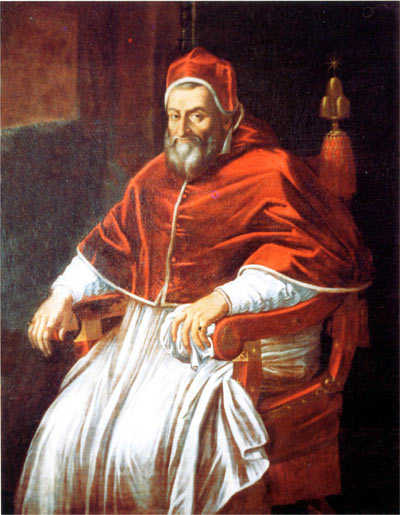
Pope Sixtus V (13 December 1521 – 27 August 1590), was
Pope from 24 April 1585 to his death in 1590.
THE LAST POPE, BENEDICT XIV. After
three weeks from death, it was permitted me to speak with the Pope, and
at that time for four days, about many things in the spiritual world,
especially about the Lord, that He is the God of heaven, and has not
given any power to any man, because power belongs solely to the Divine.
He was also instructed about the remission of sins, about heaven and
hell, about man - that it falls out to him according to the life in the
world, and very many similar matters; and, at the time, he seemed to
understand them all, and also as it were to believe them; for he so
spoke. For this reason, some cherished the hope, respecting him, that in
the world he may have been a worshipper of the Lord and in the
affection of truth, and thus that he might have been able to be of use
with the people of that religion. But he was of such disposition, that
he spoke in accordance with the affection of another, and very politely
and adroitly. [An adroit leader will be able to persuade people
to go with his ideas.] When it was supposed that he accepted the
instruction, he was left to his own love and its derivative principles;
and, when he was so left, he acted in unison with the most crafty of his
religion, countenancing and instigating the destruction of those who
were of the Reformed religion [or Reformed Christian Churches,] but
clandestinely [or executed with secrecy or concealment, especially for purposes of subversion or deception.] And,
inasmuch as he was allied with the most wicked, he also endeavored, and
this in many different ways, to totally destroy those who ascribed all
power to the Lord; and he was told to desist, because he is now in a
world where there is no respect of persons, but whoever does evil is
punished. Still, however, he persisted, believing that nobody can do
anything to him. But, when he persisted, he was punished like the rest
and indeed grievously, in a cavern where was a rigorous punisher; and,
because he still continued such, he was cast towards the west.
Inquiry
was made as to what he had been in the world, even according to his own
confession: (1) that he esteemed the Word as of no account, and, when
he read it, ridiculed many things in it, as not at all Divine. Many
passages also were recited by him, in regard to which he spoke with
derision, saying, that it was only so written according to the style of
the time: in a word, that nothing of Divinity is to be found in it; (2)
that he, in Consistory, speaks more from the Divine than is spoken in
the Word; so that he extolled his own utterances in Consistory above the
Word; (3) that, for this reason, he confirmed the Bull Unigenitus, and
persuaded people to accept... (4)
that, for this reason, he loved and honored Jesuits more than others;
of which matter, also, some things were said [as to] how [he did so].
When he was told that a large part of them were devils, and was likewise
shown this by many being gathered together to him, so that he might see
them as they were, yet, he still loved them as before; (5) he also
said, that, as regards the Saints, he thought that they had more power
than the Lord, because they are inspired by God the Father in what they
do, but that the Lord abdicated all power and conferred it on the Popes;
also, that, although without power, He still ought to be worshipped.
Thus was ascertained of what quality he had been, and therefore that
heaven was entirely closed to him, and that he acted in union with hell;
for, to him who destroys the Word, places a Papal decree above the Word
and denies all power to the Lord, heaven is fast closed, and hell is
open.

Pope Clement XII (7 April 1652 – 6 February 1740), was Pope from 12 July 1730 to his death in 1740.
With the former Pope, however, or the predecessor [That is, Clement XII. He reigned from 1790 to 1740] of this one, all is well; for he was not of such a character.
That last Pope [Benedict XIV,]
who has been described, associated himself with the worst of his
religion, who were sorcerers, and he likewise, three times, sent forth
the worst sorcerers of them: one, to destroy a spirit who was in favor
of the Lord; two, to the Reformed [Christians,] to seduce them; and,
likewise, he himself wished to learn more about magical arts. He also
sent forth other exceedingly bad sorcerers, to work evil; and, when he
was discovered to be such, he was reduced to his interiors,
consequently, into phantasies; for the interiors of such ones are
phantasies, since they think nothing about God, but about themselves
alone, and about the worship of themselves and about intrigues [make
secret plans to do something illicit or detrimental to someone.] It was
then still more clearly seen what he had been, namely, that he at first
reverenced the Word, but afterwards despised it utterly, and accounted
his own decrees Divine; that he believed himself to be wiser than all
others, because he was more crafty, as also was shown; that he was able
to enter into the interior affections of others and to see them; also,
that he reverenced the Saints more than the Lord and made them deities,
and that he dearly loved the maliciously cunning, and, for that reason,
the Jesuits.
Afterwards,
he was led down towards the western sea, [See, for further information
about this "Western Sea," nos. 5296, 5300, 5303, 5638] at the part
facing the south, and as far as to its extremity, where he stopped and
said that he wished to be in that place, because the most crafty were
there; but, still, he was brought down from thence into the west, and
from there towards those who were in the remotest mountains, [See, in
reference to these "mountains" and those who dwell on them, nos. 5648,
5652, of the present work] who
were the Neapolitans [Province of Naples, a province in the Campania
region of southern Italy that includes the city] and the worst ones of
Italy. When he was there, he also said that he wished to be there
because they are the most crafty of all, asserting that he was more
cunning than they. There he discovered a certain saint [or Roman
Catholic Pope,] who was a most powerful sorcerer, and who was then
brought out from hell in order that he might speak with him. That saint,
who was the powerful sorcerer, declared himself to be a Pope. He spoke
with the other, and wanted to determine, by competition, which was the
more cunning and it was ascertained that this one was equally cunning.
He was afterwards brought farther down, as far as somewhat into the
north, and was brought back, for a long while, through various zigzag
ways - thus, - to a part where were the worst hells of the Babylonish
[or Roman Catholic] people; for the reason that he loved such things,
and also in order to attract and imbibe [absorb or assimilate ideas or
knowledge] [them], thus, that he might apply himself to hells suited to
his interiors. Thus he was brought back to the remotest boundary, or to
the extremity, of the western sea, and there, of his own accord, plunged
himself down amongst the worst of those who were in the western sea.
Last Judgment Continued, by Emanuel Swedenborg, [1758], tr. by John Whitehead [1892] at sacred-texts.com
VII.
THE PAPISTS IN THE SPIRITUAL WORLD. The Papists [Roman Catholics,] and
the Last Judgment upon them, were treated of in the small work on The
Last Judgment (n. 53-64). The Papists in the spiritual world appear
around the Reformed [Protestant Church members,] and are separated from
them by an interval, which they are not permitted to pass. Nevertheless,
those who are of the order of Jesuits [members of the Society of Jesus,
a Roman Catholic order of priests founded by St Ignatius Loyola, St
Francis Xavier, and others in 1534, to do missionary work. The order was
zealous in opposing the Reformation,] by clandestine [kept secret or
done secretively, especially because unlawful] arts procure for
themselves communications, and also send out emissaries, by unknown
paths, for the purpose of seducing them. But they are discovered, and
after being punished, they are either sent back to their companions, or
are cast into hell.
57.
57.
After
the Last Judgment [in 1757,] their state was so changed, that they were
not allowed to gather together in companies, as before; but ways were
appointed to every love, both good and evil, which those who come from
the world immediately enter, and go to a society corresponding to their
love. Thus the wicked are borne away to a society which is in
conjunction with the hells, and the good to a society which is in
conjunction with the heavens; thus precaution is taken that they may not
form artificial heavens for themselves as before. Such societies in the
world of spirits, which is midway between heaven and hell, are
innumerable; being as many as there are genera and species of good and
evil affections. And in the meantime, before spirits are either elevated
into heaven, or cast down into hell, they are in spiritual conjunction
with men in the world, because they too are in the midst between heaven
and hell.
58.
All those of the Papists, who have not been wholly idolaters, and who, from their religious persuasion, have done goods [good works] out of a sincere heart, and have also looked to the Lord, are led to societies which are instituted in the confines nearest to the Reformed, and are instructed there, the Word being read, and the Lord preached to them; and they who receive truths and apply them to life, are elevated into heaven and become angels. There are many such societies of them in every quarter, and they are guarded on all sides from the treacheries and cunning devices of the monks, and from the Babylonish [Roman Catholic Church] leaven. [Leaven signifies the falsity of the natural man.] Moreover, all their infants are in heaven, because, being educated by the angels under the guidance of the Lord, they know nothing of the falsities of the religion of their parents.
58.
All those of the Papists, who have not been wholly idolaters, and who, from their religious persuasion, have done goods [good works] out of a sincere heart, and have also looked to the Lord, are led to societies which are instituted in the confines nearest to the Reformed, and are instructed there, the Word being read, and the Lord preached to them; and they who receive truths and apply them to life, are elevated into heaven and become angels. There are many such societies of them in every quarter, and they are guarded on all sides from the treacheries and cunning devices of the monks, and from the Babylonish [Roman Catholic Church] leaven. [Leaven signifies the falsity of the natural man.] Moreover, all their infants are in heaven, because, being educated by the angels under the guidance of the Lord, they know nothing of the falsities of the religion of their parents.
All
who come from the earth into the spiritual world, are at first kept in
the confession of faith, and in the religion of their country; and so
therefore are the Papists. On this account, they always have some
representative Pontiff [Pope] set over them, whom they also adore with
the same ceremony as in the world. Rarely does any Pope from the world
act the Pontiff there; yet he who was Pope at Rome twenty years ago,
[This was published in 1763] was appointed over the Papists, because he
cherished in heart that the Word is more holy than is believed, and that
the Lord ought to be worshiped. But, after filling the office of Pope
for some years, he abdicated it, and betook himself to the Reformed
Christians, among whom he still is, and enjoys a happy life. It was
granted me to speak with him, and he said, that he adored the Lord
alone, because He is God, who has power over heaven and earth, and that
the invocations of saints, and also their masses, are trifles; [a thing
of little value or importance] and that when he was in the world, he
intended to restore that church, but that for reasons, which he
mentioned, he found it impossible to do so. When the great northern city
of the Papists was destroyed, on the day of the Last Judgment, I saw
him carried out of it on a couch, and taken to a place of safety. Quite a
different thing happened to his successor.
Here
I am allowed to add something memorable. It was granted me to speak
with Louis XIV., grandfather of the reigning king of France, who while
he was in the world, worshiped the Lord, read the Word, and acknowledged
the Pope only as the highest one of the church; in consequence of
which, he has great dignity in the spiritual world, and rules the best
society of the French nation. Once I saw him as it were descending by
ladders, and after he descended I heard him saying, that he seemed to
himself as if at Versailles, and then there was silence round about for
half an hour; at the end of that time, he said, that he had spoken with
the king of France, his grandson, concerning the Bull Unigenitus,
advising him to desist from his former design, and not to accept it,
because it was detrimental to the French nation, he said that he
insinuated this into his thought profoundly. This took place in the year
1759, on the 13th day of December, about eight o'clock in the evening.
VIII.
THE POPISH SAINTS IN THE SPIRITUAL WORLD. It is known that man has from
his parents implanted or hereditary evil, but in what it consists is
known to few. It consists in the love of ruling, which is such, that as
far as the reins are given it, so far it bursts forth, until it even
burns with the lust of ruling over all, and at length of wishing to be
invoked and worshiped as God. This love is the serpent, which deceived
Eve and Adam, for it said to the woman: God knows, that in the day ye
eat of the fruit of the tree, your eyes shall be opened, and then ye
shall be as God (Gen. 3:4, 5). As far therefore as man rushes with
loosened reins into this love, so far he turns himself away from God,
and turns towards himself, and becomes an atheist; and then the Divine
truths which are of the Word, may serve as means, but because dominion
is the end, the means are in the heart only as they serve him. This is
the reason why those who are in the mediate [middle level] and in the
ultimate [lowest or outer most] degree of the love of ruling, are all in
hell, for that love is the devil there; and in hell there are some of
such a nature, that they cannot bear to hear any one speaking of God.
62.
Those of the Papal nation have this love who have had dominion from the frenzy of its delight, and have despised the Word, and preferred the dictates of the Pope to it. They are utterly devastated [destroyed] as to externals, until they no longer know anything of the church, and then they are cast down into hell and become devils. There is a certain separate hell for those who wish to be invoked as gods, where such is their fantasy, that they do not see what is, but what is not. Their delirium is such as affects persons in a malignant [deadly] fever, who see things floating in the air and in the chamber, and on the covering of the bed, which do not exist...
Those of the Papal nation have this love who have had dominion from the frenzy of its delight, and have despised the Word, and preferred the dictates of the Pope to it. They are utterly devastated [destroyed] as to externals, until they no longer know anything of the church, and then they are cast down into hell and become devils. There is a certain separate hell for those who wish to be invoked as gods, where such is their fantasy, that they do not see what is, but what is not. Their delirium is such as affects persons in a malignant [deadly] fever, who see things floating in the air and in the chamber, and on the covering of the bed, which do not exist...
Because
man from heredity is such, that he wishes to rule, and as the reins are
loosened, successively over more, and at length over all, and because
the wish to be invoked and worshiped as God, is the inmost of this love
of ruling, therefore all who have been made saints by the Papal bulls,
are removed from the sight of others and hidden, and are deprived of all
interaction with their worshipers. This is done, lest that worst root
of evils should be excited in them, and they should be hurried into such
fantastic deliriums as prevail in the above mentioned hell. In such
deliriums are those who, when they lived in the world, have eagerly
sought to be made saints after death, for the purpose of being invoked.
[Call on a deity or spirit in prayer.]
Many
of the Papal nation, especially the monks, when they come into the
spiritual world, seek the saints, each the saint of his own order; yet
they do not find them, and therefore they wonder. But afterwards they
are instructed by others, that they [the Roman Catholic saints] are
either intermingled with those who are in the heavens, or with those who
are in the hells, every one according to his life in the world; and
that in whichsoever they are, they know nothing of the worship and
invocation of themselves; and that they who know it, and wished to be
invoked, are in that separate and delirious hell. The worship of saints
is such an abomination in heaven, that whenever they hear of it they are
horrified, because as far as worship is paid to any man, in so far it
is withheld from the Lord, for thus He alone cannot be worshiped; and if
the Lord is not alone worshiped, a discrimination is made, which
destroys communion, and the felicity [joy] of life which flows from it.
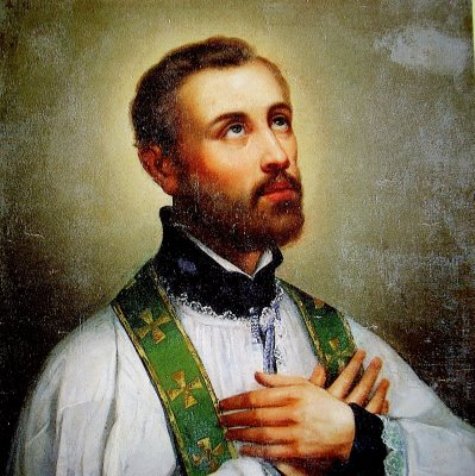
[Saint Francis Xavier, (7 April 1506 – 3 December 1552), was a Navarrese Basque Roman Catholic missionary, born in Xavier, Kingdom of Navarre (now part of Spain), and a co-founder of the Society of Jesus... and one of the first seven Jesuits who took vows of poverty and chastity at Montmartre, Paris in 1534. -Wikipedia]
That
I might know, for the sake of informing others, what kind of men the
Popish saints are, as many as a hundred of them, who knew of their
canonization, were brought up from the lower earth [which is between
heaven and hell.] The greater part ascended from behind, and only a few
in front, and I spoke with one of them, who they said was Xavier. While
he talked with me, he was quite foolish, yet he was able to tell me,
that in his place, where he remains confined, he is not so; but that he
becomes foolish as often as he thinks that he is a saint. I heard a like
murmur from those who were behind.

Mary mother of Jesus
It
is otherwise with the so-called saints who are in heaven; they know
nothing at all of what is doing upon earth, nor have I spoken with them,
lest any idea of this should enter their minds. Only once Mary, the
mother of the Lord, passed by, and appeared over head in white raiment,
and then, stopping awhile, she said that she had been the mother of the
Lord, and that He was indeed born of her, but that He became God, and
put off all the human from her, and that therefore she now adores Him as
her God, and is unwilling that any one should acknowledge Him as her
Son, because in Him all is Divine.

Life of St. Genevieve by Pierre Puvis de Chavannes
...A
certain woman in splendid [shining] raiment and with saint-like
countenance, occasionally appears in a middle altitude, to the Parisians
who are in a society in the spiritual world, and tells them she is
Genevieve. But as soon as any of them begin to adore her, then instantly
her countenance is changed, and her raiment too, and she becomes like
an ordinary woman, and chides them for wishing to adore a woman, who,
among her companions, is in no more repute than a maid servant;
wondering that men in the world are caught by such trifles. The angels
said that she appears for the purpose of separating those there who
worship man from those who worship the Lord.
True Christian Religion, by Emanuel Swedenborg, [1771], tr. by John C. Ager [1906] at sacred-texts.com
...It
is said by those who serve them in the world, that the [Roman Catholic]
saints reign in heaven in company with the Lord Jesus Christ; but this
is a fiction and fabrication...